


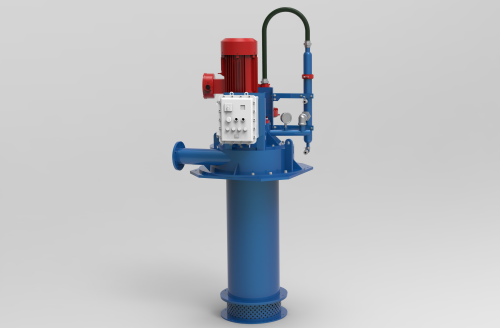
Engineers developed the centrifugal degasser (also known as a centrifugal vacuum degasser) as a high-efficiency unit for gas-cut drilling fluids. Using centrifugal separation, it rapidly removes entrained gases from drilling fluid, ensuring stable circulation system performance. People typically install it downstream of shale shakers. It supports drilling mud treatment, solids control systems, and mud purification for trenchless engineering. The equipment restores mud density, maintains viscosity stability, reduces drilling costs, and improves operational safety. It can also function as a high-power agitator to keep mud homogeneous during circulation.
Operational Process
During operation, the centrifugal degasser generates a strong centrifugal force through rotating components. This greatly increases bubble buoyancy and accelerates gas separation. Once bubbles reach the surface, turbulence breaks the gas and releases it. After that, an integrated blower extracts the gas and discharges it to a safe zone or flare system. This enables efficient and secure degassing.
Technical Advantages
Compared with conventional vacuum degassers, the centrifugal degasser features a compact structure, flexible installation, and stable operation. Operators can install it directly inside the mud tank. Therefore, it does not require extra tank-top space, making it suitable for limited-space sites. Its modular design integrates the centrifugal cylinder, filtration components, motor, and supports for easier maintenance and replacement.
Performance and Efficiency
The centrifugal degasser handles high gas-cut conditions while maintaining high throughput, low energy consumption, and efficient performance. Operators can install it directly inside the mud tank. Therefore, it requires no extra tank-top space, making it suitable for compact installations.
Applications and Future Outlook
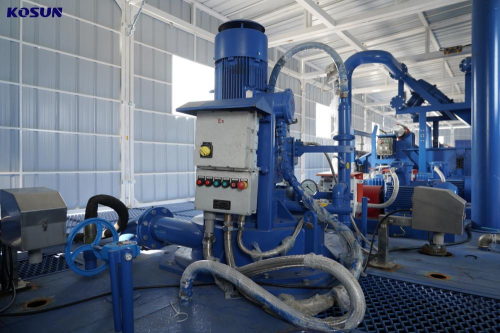
Companies widely use the equipment on onshore and offshore drilling platforms. They also apply it in geothermal wells, shale gas projects, and horizontal directional drilling (HDD). Its reliable gas-liquid separation performance makes it essential in modern mud circulation systems. Moreover, with advances in automation and intelligent monitoring, future systems will support real-time parameter adjustment. They will also enable intelligent diagnostics for more precise drilling fluid treatment.
Conclusion
The centrifugal degasser is a critical component of modern solids control systems. Efficiently removing entrained gases from drilling fluid, it restores mud density, protects downstream equipment, and improves drilling safety and efficiency.