


Oil sludge can contain oil, water, and solid particles in varying proportions, making treatment challenging. A suitable oil sludge treatment process helps separate these components, recover useful resources, and manage the remaining waste more effectively.
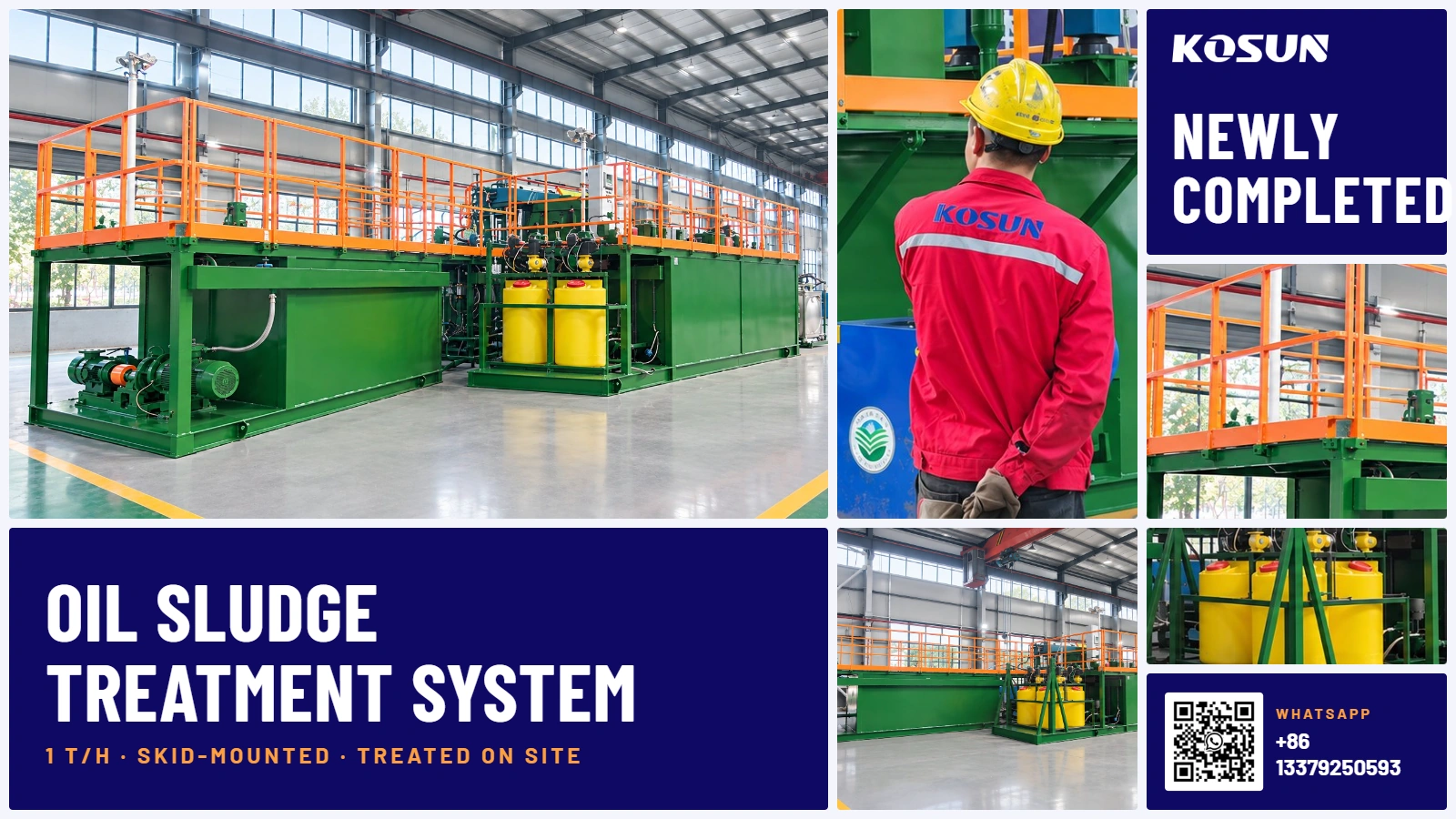
Key Stages of the Treatment Process
An integrated oil sludge treatment system typically combines several stages:
- Pretreatment: Prepares the incoming sludge for further processing.
- Heating and chemical dosing: Conditions the material and supports oil separation.
- Thermal washing: Helps release oil from solid particles.
- Three-phase centrifugal separation: Separates the mixture into oil, water, and solids.
- Oil storage and automatic control: Supports recovered oil collection and coordinated system operation.
The process configuration and operating parameters should be selected according to sludge characteristics and treatment objectives.
An Integrated Solution for Industrial Applications
KOSUN’s oil sludge treatment system integrates these functional units into a coordinated solution, with a nominal processing capacity of 1 metric tonne per hour for this configuration.
The process supports oil recovery and solid waste volume reduction. Separated water can also be evaluated for reuse after appropriate treatment, while recovered oil and solid residue should be assessed against their intended reuse or disposal requirements.
When selecting an oil sludge treatment system, important factors include feed composition, processing capacity, oil recovery objectives, water treatment needs, and site conditions.
Kosun provides solid-liquid separation and industrial waste treatment solutions designed around practical process requirements, helping support resource recovery and more efficient waste management.