

Mud Cooling Systems Overview
Based on their intended application, mud cooling systems are broadly categorized into two main types: onshore mud cooling equipment and offshore platform mud cooling equipment.
Onshore mud cooling equipment is further classified based on whether an adequate water supply is available at the installation site:
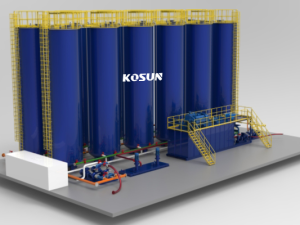
1. Recommended for Sites with an Adequate Water Supply
Cooling Method: Direct Cooling
Advantages: Simple structure; large-diameter inlet pipe minimizes the risk of clogging
Temperature Drop: 20–30°C (depends on ambient conditions)
Processing Capacity: 120 to 200 m³/h
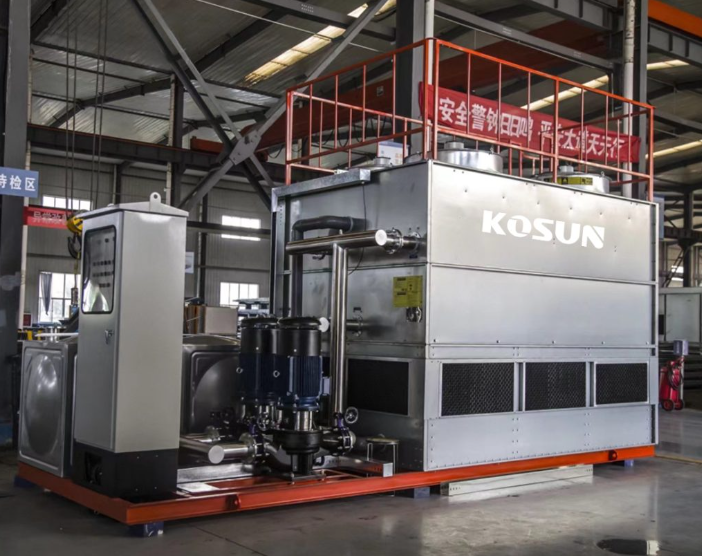
Technical Parameters
| Model | Processing Capacity | Cooling Rate | Design Pressure | Footprint | Notes |
| KSNQ-150 | ≤150m³/h | ≤30℃ | 1.6Mpa | 15㎡ | wet bulb temperature 28℃ |
2. Recommended Solution for Sites with Available Water Sources Where Water Conservation is Required:
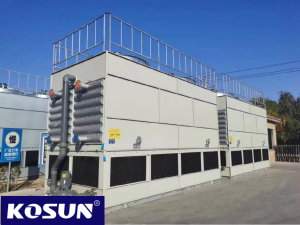
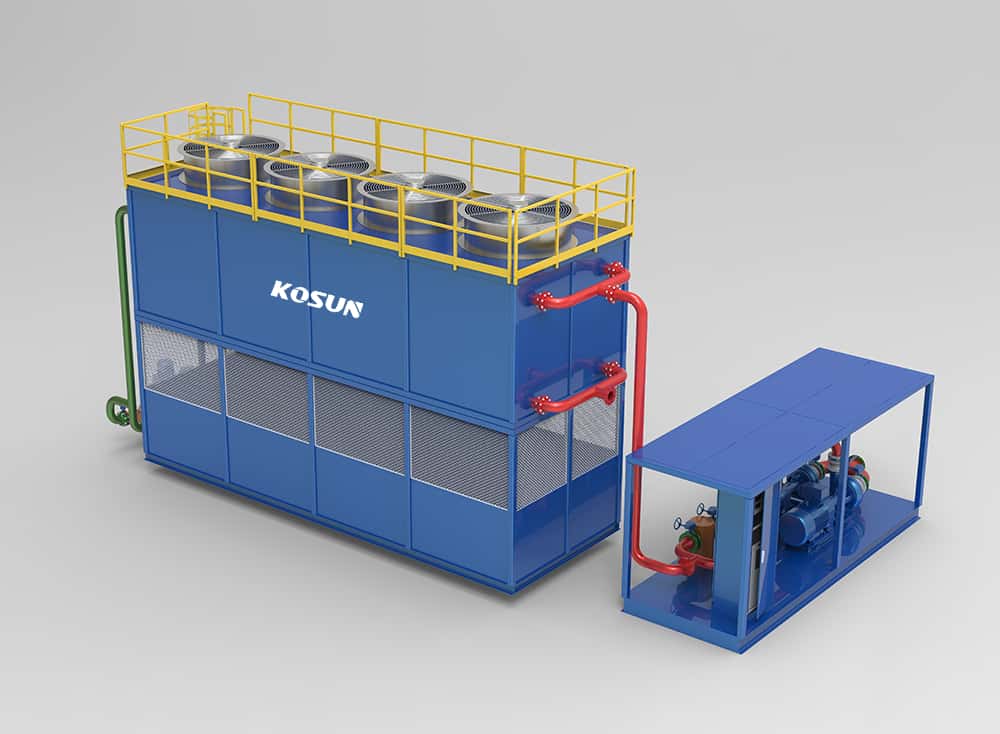
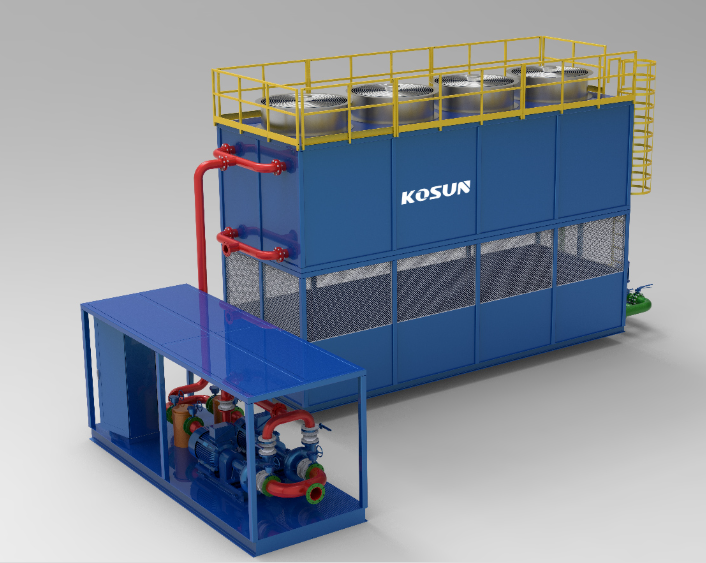
Cooling Method: Plate Heat Exchanger + Closed-Circuit Cooling Tower Configuration.
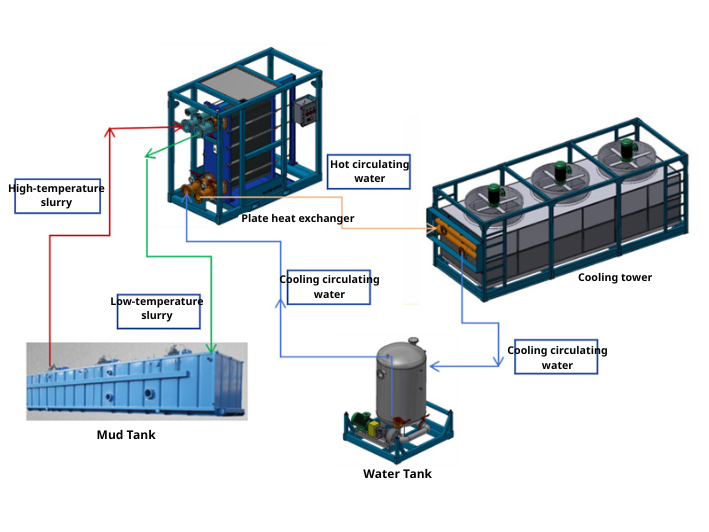
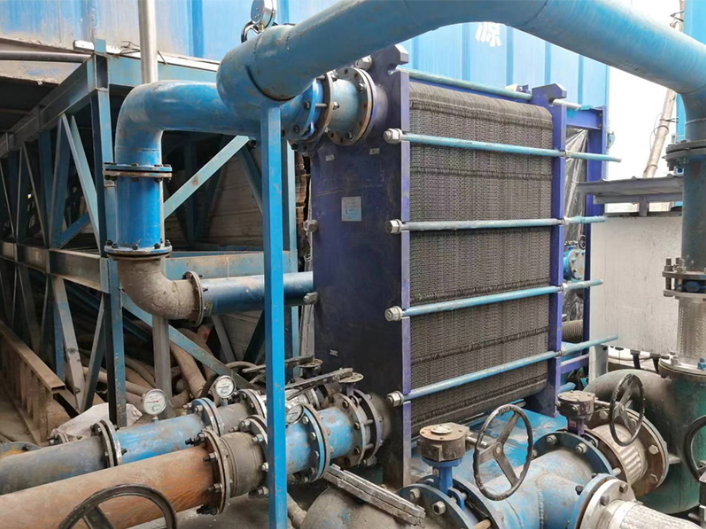
3. Recommended Solution for Sites Lacking or Devoid of Water:
Cooling Method: Plate Heat Exchanger + Air Cooler Configuration.
Advantages: Ideal for water-scarce regions; one-time investment with zero operational costs; 20–30°C temperature drop (depends on ambient temperature); processing capacity 120–200 m³/h.
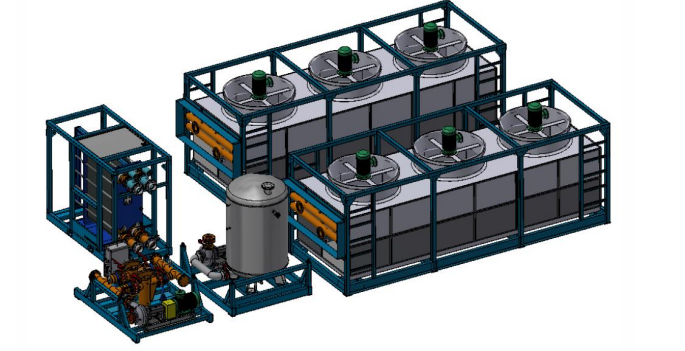
4. Recommended Solution for Sites Lacking a Water Source (or with Limited Water Availability) Where Cooling Below Ambient Temperature is Required:
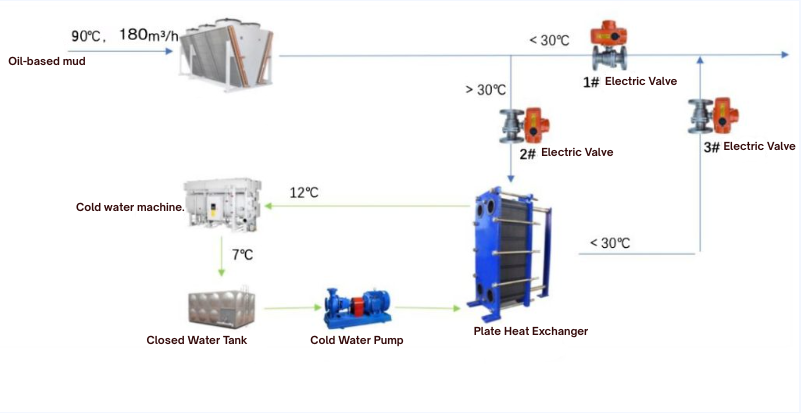
Cooling Method: Plate Heat Exchanger + Air Cooler + Chiller Unit.
Advantages: Ideal for regions with limited or no access to water; one-time initial investment with virtually no recurring costs; includes a chiller unit to lower temperatures below ambient levels; maximizes operational cost savings while meeting site-specific requirements; achieves a temperature reduction of 20–30°C with a processing capacity of 150–200 m³/h.
5. Offshore Platform Mud Cooling:
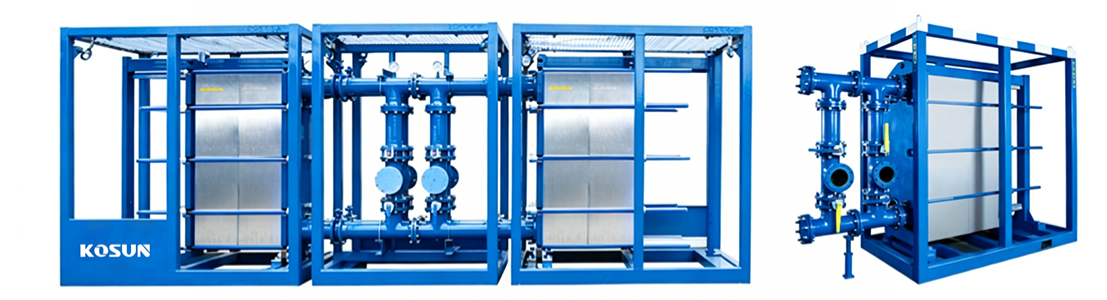
Cooling Method: Titanium Plate Heat Exchanger (using seawater as the cooling source);
Advantages: Compact footprint, significant temperature reduction, operating temperature range of 30–50°C, processing capacity of 120–200 m³/h, and can be used individually or in combination depending on required processing volume.
Technical Specifications:
| Model | Processing Capacity | Cooling Rate | Design Pressure | Footprint | Notes |
| KSNQ-150.1 | ≤150m³/h | ≤50℃ | 1.6Mpa | 5㎡ | – |