


Packaged mud recycling systems have become essential for trenchless drilling operations, including horizontal directional drilling (HDD), geothermal drilling, and water well drilling. Their growing adoption is driven by significant benefits such as reduced mud costs, extended equipment lifespan, improved penetration rates, and lower disposal expenses. KOSUN provides complete mud recycling systems designed to meet the demanding requirements of modern trenchless operations.
The Evolution of Mud Recycling Systems
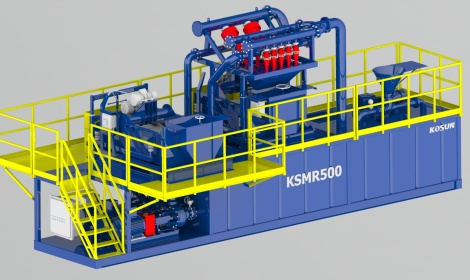
Modern mud recycling systems, also known as mud reclaimers or cleaning systems, represent a major advancement from traditional oilfield-based units. Designed specifically for compact trenchless job sites, they play a critical role in overall solids control management. Understanding how a mud reclaimer operates and how fluid moves through the system is essential when selecting the right equipment. This article explains the process based on a system capable of processing up to 500 GPM and separating solids/liquids down to 20 microns.
System Components
Packaged mud recycling systems are integrated units that include shale shakers, hydrocyclone desanders/desilters, centrifugal pumps, solids loading hoppers, partitioned tanks, and mud guns or top-mounted agitators. KOSUN systems combine reliable components to ensure continuous performance in challenging drilling environments.
The Process Begins: From the Pit
The process starts when used drilling fluid returns from the borehole into a catch basin. A submersible pickup pump transfers the fluid to the reclaimer. Proper pump sizing according to system capacity, along with a heavy-duty strainer and chrome alloy impeller, ensures reliable operation.
Shale Shaker: The First Stage of Separation
The recovered fluid first passes through the onboard shale shaker, the primary solids control component. Available in two-, four-, or six-panel configurations depending on capacity, shale shakers use high G-force vibration to separate solids from liquid.
The bottom deck typically removes solids down to approximately 200 microns using specially designed screen panels. These screens consist of stainless-steel wire cloth layers that allow fluid to pass while retaining larger solids for disposal. Proper screen selection is essential for effective separation.
KOSUN shale shakers feature advanced vibration technology and durable screens to maximize solids removal efficiency.
Hydrocyclone Desilters/Desanders: Fine Separation
After passing through the shaker, the fluid enters the dirty tank and is pumped into hydrocyclones for further separation. Hydrocyclones convert pump pressure into centrifugal force, separating suspended solids from drilling fluid.
Depending on the design, hydrocyclones remove solids ranging from approximately 20 to 250 microns. Solids exit through the cone apex, while cleaned fluid exits through the overflow and returns for further processing. Larger systems may include additional desanders before desilter processing.
Maintaining proper operating pressure is essential to ensure consistent hydrocyclone performance.
KOSUN hydrocyclones are engineered for efficient separation and long-term reliability in demanding drilling conditions.

Clean Tank and Mud Conditioning
After separation, the cleaned drilling fluid flows into the clean tank, where key properties such as weight, viscosity, and gel strength are monitored. Additives like barite or bentonite can then be added through a jet shear mixing hopper to restore the required mud properties.
The conditioned fluid is transferred back to the drilling rig through an onboard centrifugal pump for reuse.
Tank Agitation and Maintenance
Both dirty and clean tanks require continuous agitation to prevent solids from settling and maintain effective separation. This is achieved through mud guns or top-mounted agitators.
A standard mud recycling system typically includes dedicated pumps for desilter operation, hopper/mud gun circulation, and fluid transfer. Larger systems may require an additional pump to supply hydrocyclone desanders.
Conclusion
Although the operating principle of a packaged mud recycling system is straightforward, each component must perform efficiently to achieve optimal solids/liquid separation. From initial recovery to final conditioning, the system ensures drilling fluid quality, reduces waste, and improves operational efficiency.
Trailer-mounted systems with integrated generators provide mobility and convenience while supporting environmentally responsible drilling practices. With advanced mud recycling technology and professional support, KOSUN helps customers reduce costs, improve performance, and achieve more sustainable drilling operations.